Custom platforms, built from brief to production.
AG Systems leads custom software from an initial brief through assessment, implementation, launch, and post-launch operation. Existing systems can be modernized or supported when focused senior ownership is needed.
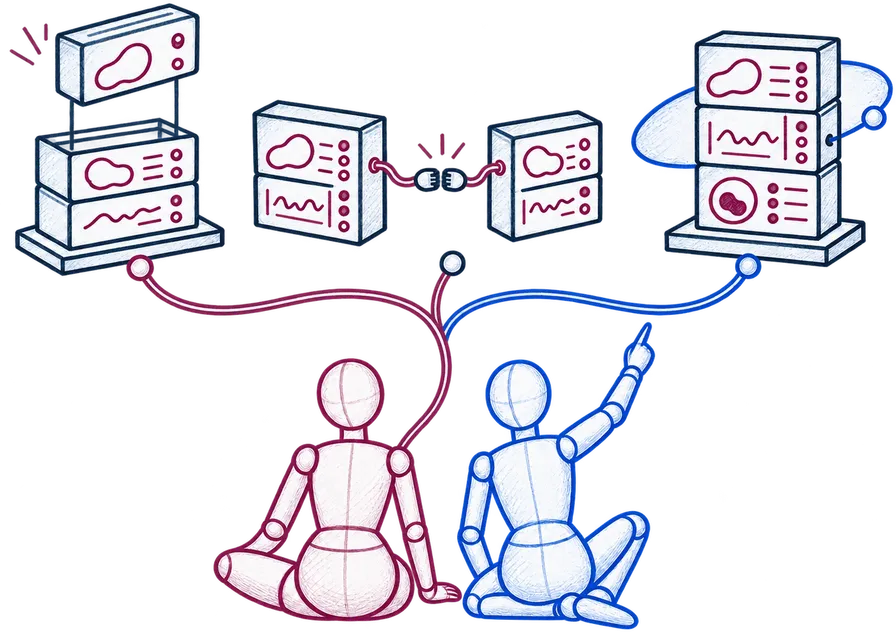
Build a custom platform from brief to production
AG Systems takes responsibility for the work between an initial business brief and a production system. The engagement can cover product definition, software delivery, cloud infrastructure, launch, and operational transfer.
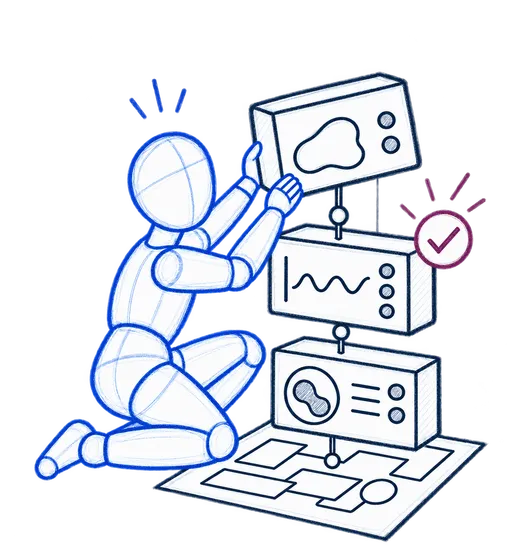
Typical work
- 01Clarify the problem, constraints, operating roles, and acceptance criteria
- 02Compare off-the-shelf and custom approaches before committing to a build
- 03Define the architecture and record consequential decisions
- 04Implement and integrate the product, backend, infrastructure, and delivery workflows
- 05Test, launch, document, and train
You receive
- →An agreed product and technical specification
- →Working software demonstrated in short delivery cycles
- →Production infrastructure and deployment workflows
- →Tests, decision records, operator guides, and runbooks
A good fit if
You have a validated need and a brief, but no internal engineering team to carry it to production.
Boundary
A custom build must earn its cost. If an existing product fits the need better, the initial recommendation will say so.
Modernize an existing platform from evidence
Modernization starts with the behavior of the existing system: where delivery is slow, failures recur, costs are difficult to explain, or change has become risky. The problem is measured before a rewrite or migration is prescribed.
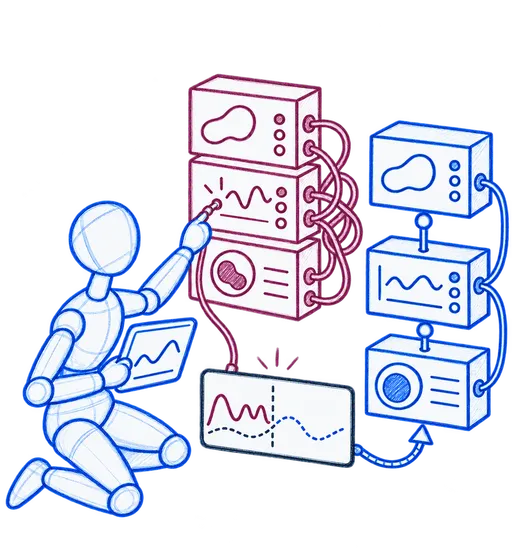
Typical work
- 01Review architecture, code, infrastructure, delivery workflows, and operating evidence
- 02Measure performance, reliability, capacity, and cost where data is available
- 03Evaluate changes by value, risk, and sequencing
- 04Implement agreed migrations, performance work, or platform simplification
You receive
- →An assessment with findings, options, and trade-offs
- →A prioritized modernization plan
- →Implemented changes verified against the original problem
- →Updated decision records and operating guidance
A good fit if
Your platform works, but it is slow, fragile, or expensive, and changes take longer than they should.
Boundary
A rewrite is not assumed. The recommendation may be a focused change or a staged migration.
Operate production under a defined service level
AG Systems can remain responsible for a system after launch: receiving agreed alerts, maintaining delivery and observability tooling, investigating failures, planning reliability work, and shipping controlled improvements.
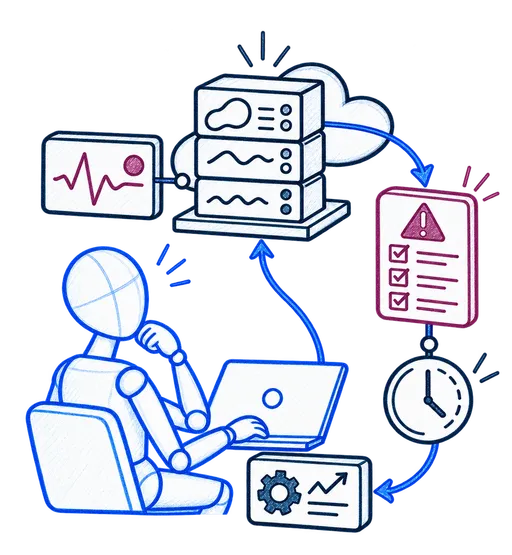
Typical work
- 01Monitor production health and receive agreed alerts
- 02Maintain observability and delivery tooling
- 03Investigate failures and follow through on reliability work
- 04Plan and ship controlled platform improvements
- 05Review architecture, capacity, and operational risk
You receive
- →A defined service level, coverage, and escalation path
- →Maintained dashboards, alerts, pipelines, and runbooks
- →Incident analysis and prioritized reliability work
- →A current view of platform risk and planned improvements
A good fit if
You need someone senior accountable for production without hiring a full-time platform team.
Boundary
Coverage and response times are agreed through an SLA. Operate is not an end-user help desk and does not imply a standing 24/7 on-call commitment.
The right tools for the job
We work across software development, cloud infrastructure, and production operations, choosing tools to fit the system's requirements and operating needs.
Innovation guided by engineering judgment
We use the best available tools for the job, from frameworks and development environments to AI language models and coding agents. Customer privacy guides these choices, including which models we use and where and how client data is processed. We evaluate new tools and approaches by measurable improvements in developer experience, productivity, and reliability. Engineers guide the work, review and validate the results, and retain the final say on technical decisions and what ships.
Backend and APIs
Business logic and services designed for dependable performance.
Java · Kotlin · Spring Boot · WebFlux · Node.js · Python · Django · .NET
Web interfaces
Storefronts and administration tools built around how people work.
React · Astro · JavaScript · TypeScript · Tailwind CSS · Angular · SolidJS
Data and integrations
Reliable data flows, storage, caching, and asynchronous processing.
PostgreSQL · MySQL · Redis · Kafka · Kinesis · DynamoDB · RabbitMQ · Cassandra · Memcached
Cloud and infrastructure
Repeatable infrastructure, cloud migrations, load balancing, and ingress controllers.
AWS · Azure · Kubernetes · Terraform · Helm · Ansible · Cloudflare
Our cloud expertise covers networking, load balancing, compute, container platforms, managed databases, messaging services, and serverless functions.
Delivery and operations
Automated releases, repeatable deployments, and readiness for production.
GitHub Actions · Jenkins · Spinnaker · Argo · Kustomize
Observability and incident response
Monitoring at scale, actionable alerts, and coordinated incident response.
Splunk · ELK Stack · Amazon CloudWatch · Prometheus · Thanos · Alertmanager · PagerDuty · ServiceNow
Your stack could be next
Working with Go (Golang), Rust, or FastAPI? Perhaps Next.js or Vue for web interfaces; Swift, Flutter, iOS, or Android for mobile; MongoDB for data; Google Cloud, DigitalOcean, or Hetzner for infrastructure; GitLab CI/CD for delivery; or Grafana and OpenTelemetry for observability? Whatever your stack, the conversation is open.
Language familiarity helps us get started; experience in architecture, testing, integration, and production helps us deliver dependable software. Bring us your brief, and we’ll assess the fit, the right tooling, and any specialist expertise the work needs.
Founder certifications · Alex Gavrisco
- Certified Kubernetes Application Developer (CKAD)
- AWS Certified Cloud Practitioner
Our expertise spans AG Systems projects and past engineering experience.
A decision before a commitment
The first response should help you choose a sensible path, not push a predetermined implementation.
- 01
Initial brief review
Describe the business problem, what exists today, and what needs to change. The review is free. AG Systems responds with an initial view of scope, feasibility, and practical next steps.
- 02
Assessment and discovery
Before implementation starts, the requirements, constraints, risks, existing technology, and viable approaches are examined in enough detail to make a responsible commitment. This is the first phase of the collaboration.
After assessment and discovery, we discuss budget options based on the scope, complexity, timeline, and technology choices. Scope and budget are agreed before implementation begins.
- 03
Scoped delivery
The agreed work is delivered through visible increments, recorded technical decisions, testing, production preparation, and documentation.
- 04
Handover or continued operation
The client can take full operational ownership, retain AG Systems under an agreed service level, or use a mixture of both.
Start with a brief
Describe the business problem, what exists today, and what needs to change. The initial review is free. The reply will outline practical next steps for assessment and delivery.