Founder-led engineering with trusted collaborators.
AG Systems is a founder-led software engineering company. Its work draws on more than 13 years of experience across product development, distributed systems, cloud infrastructure, and production operations.
Alex Gavrisco · Founder & Principal Software Engineer
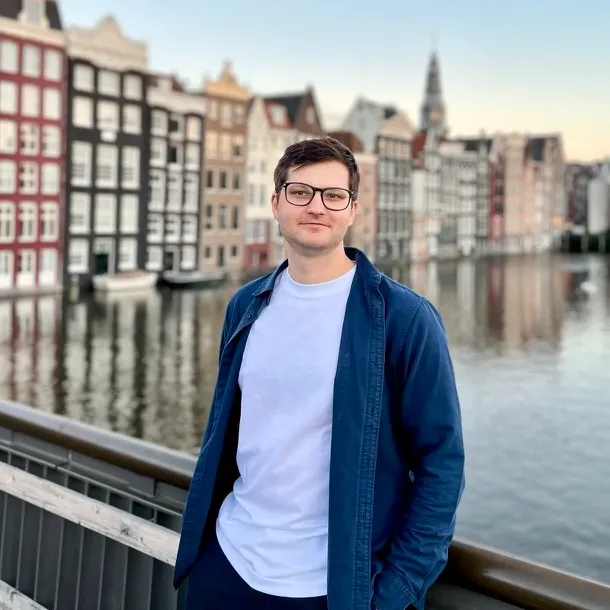
Why I started AG Systems
At Adobe, my responsibilities extended beyond software implementation. I worked across product requirements and specifications, system architecture, infrastructure, and the processes needed to make software ready for production and operate it reliably.
Over time, I saw an opportunity to build teams that could bring the same breadth of ownership and engineering discipline to companies shipping their own products. I started AG Systems to do that: carry the work across product, engineering, infrastructure, and operations without losing responsibility at the boundaries.
quality: Enterprise-grade quality does not mean importing enterprise complexity into every project. It means taking the lessons and practices that have proved effective in large-scale systems and adapting them to the needs, constraints, and scale of the work at hand. In practice, that means making consequential decisions deliberately, testing the boundaries that matter, preparing the system for production, and leaving the client able to understand and operate what was delivered.
Experience across the whole system
More than 13 years of software engineering experience across financial services, IoT, public-sector reporting, SaaS, commerce, and enterprise personalization, from custom business platforms to globally distributed cloud services. Nearly seven years at Adobe included work on systems handling 6B+ requests per day and leadership of distributed data infrastructure spanning 7+ AWS locations with single-digit-millisecond reads.
A team shaped to the work
Alex remains responsible for the engagement and brings in additional specialists when the scope requires them. Roles are added because the work needs them, with responsibility kept explicit.
Most collaborators are people Alex has worked with before, across product design, frontend and full-stack engineering, and other disciplines. When a project needs a specialist outside that group, Alex interviews and evaluates them directly before they join the work.
ownership: Clients retain a direct line to the person responsible for architecture, delivery, and production readiness.
What the operating model means in practice
Principle 01
Custom must justify its cost
The first recommendation may be an existing product, a smaller change, or a staged approach. A custom build is proposed only when the fit and long-term control justify it.
Principle 02
Decisions remain inspectable
Consequential technical decisions are recorded with their constraints and trade-offs, so the reasoning remains available after a meeting or handover.
Principle 03
Innovation guided by engineering judgment
Frameworks, development environments, AI models, and coding agents are chosen for measurable improvements in how we work and what we deliver. Customer privacy shapes the tooling and model choices; engineers review and validate the results and retain the final say.
Principle 04
Operation is part of delivery
Testing, observability, deployment workflows, documentation, and handover are part of the system rather than work left until after launch.
Talk directly to the person responsible for the work
Project briefs go directly to Alex. He reviews the problem, what exists today, and what needs to change, then suggests a practical next step.